Pneumonia vs. Bronchitis: How to Tell the Difference
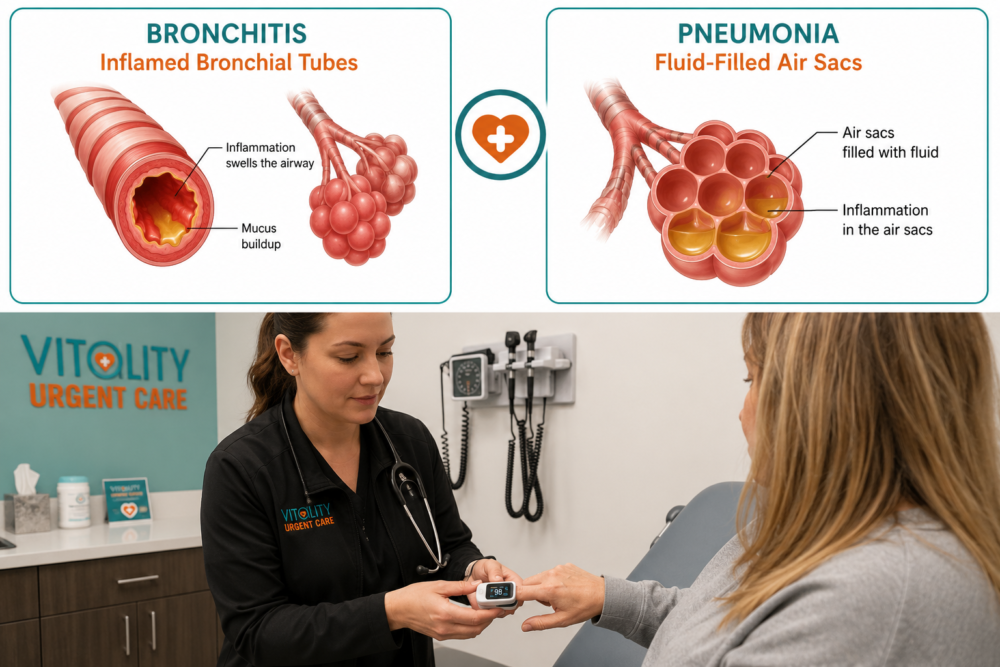
Key Points
- Bronchitis inflames the airways; pneumonia infects the air sacs deeper in the lungs
- Pneumonia is usually more severe, with higher fever, chest pain, and shortness of breath
- Most acute bronchitis is viral and does not improve with antibiotics
- COPD, smoking, a suppressed immune system, or age 65+ lower the threshold for imaging
- Vitality Urgent Care offers walk-in lung exams, oxygen checks, and same-day evaluation
What Is the Difference Between Bronchitis and Pneumonia?
Bronchitis and pneumonia affect two different parts of the same lung. Acute bronchitis inflames the bronchial tubes, the branching airways that carry air toward your lungs. Pneumonia infects the alveoli, the tiny air sacs where oxygen crosses into your blood.
Picture an upside-down tree. Bronchitis irritates the branches, so they swell and make you cough, but air still reaches the sacs. Pneumonia fills those sacs with fluid, so less oxygen gets through. That is why pneumonia makes you feel sick all over, not just in your chest.
Most bronchitis clears on its own in about three weeks. Pneumonia usually needs treatment.
From the Exam Room: What We See
Not every cough looks the same. Some patients arrive certain they have pneumonia and have textbook bronchitis. Others downplay a cough that turns out to be a real infection in one lung.
The pattern I watch for most is getting better, then getting worse. You had a cold, you started to turn the corner, and then a new fever showed up with a deeper cough. That second dip is the one worth checking.
Telling them apart comes down to four things. How the illness has behaved over time, what your lungs sound like, your vital signs, and your oxygen level. With bronchitis, I usually hear noise spread evenly through both lungs. With pneumonia, I am listening for something in one spot: crackles, quiet breath sounds, a change when you speak.
A pulse oximeter on your finger settles a lot in seconds. Bronchitis rarely moves that number. If your oxygen has dropped, the air sacs are involved and the plan changes immediately. We take chest X-rays at both clinics, so you get an answer during the same visit.
We also rule out look-alikes: asthma flares, post-viral cough, acid reflux, and in smokers, something that needs a closer look than either diagnosis.
Bronchitis vs. Pneumonia Symptoms
No single symptom decides it. Some people with pneumonia never spike a high fever, and some people with bronchitis feel awful for a week.
Bronchitis Symptoms
- Cough – Nagging, often dry at first, then productive with clear or yellow sputum
- Fever – None, or low grade
- Chest – Sore or raw from coughing
- Breathing – Normal, or a little wheezy
- Energy – Tired but still functional
- Onset – Follows a cold, builds over several days
- Course – Cough lingers about three weeks
Pneumonia Symptoms
- Cough – Deeper and wetter, sometimes green, rust-colored, or blood-tinged
- Fever – Often higher, with shaking chills
- Chest – Sharp pain, usually on one side, worse with a deep breath
- Breathing – Short of breath, or breathing faster than usual
- Energy – Wiped out, sometimes confused in older adults
- Onset – Can come on fast, sometimes within a day
- Course – Slow to improve without treatment
What Causes Them?
Bronchitis is almost always viral. It usually follows a cold or the flu, when inflammation and mucus clog the airways. Smoke, dust, and air pollution can trigger it too.
Pneumonia can be bacterial, viral, or fungal.
Common causes include:
- Streptococcus pneumoniae, the most common bacterial cause
- Influenza, RSV, and COVID-19
- Mycoplasma pneumoniae, which causes walking pneumonia
- Aspiration, when food or fluid goes into the lungs
Walking pneumonia, also called atypical pneumonia, is a milder form seen most often in school-age children and young adults. It builds slowly, brings a dry cough and headache, and people keep going to work and school. Mild does not mean it clears on its own.
Risk Factors
- Smoking now, or years of smoking in the past
- COPD, chronic bronchitis, emphysema, or asthma
- Age 65 and older, or infants and toddlers
- A suppressed immune system, including chemotherapy, transplant, long-term steroids, or poorly controlled diabetes
- Heart failure or another chronic heart or lung condition
- Recent cold, flu, or COVID-19
If you are in one of these groups, the same cough deserves a more careful look. The threshold for checking your oxygen and imaging your chest is lower.
Prevention Tips
- Get the annual flu shot, which lowers your risk of the pneumonia that follows influenza
- Ask about pneumococcal vaccination, now recommended for all adults 50 and older
- Wash your hands often, especially during respiratory season
- Stop smoking, or take real steps toward it, since tobacco damages the tiny hairs that clear your airways
- Manage COPD, asthma, and diabetes steadily rather than in flares
- Stay home while you are febrile and coughing
Treatment & Relief
For bronchitis, antibiotics do nothing against a virus. They will not shorten your cough, and they carry real downsides: upset stomach, diarrhea, allergic reactions, and resistance that makes future infections harder to treat. What helps is unglamorous:
- Fluids and rest — the cough is the last symptom to leave
- Honey — for adults and children over one year
- A humidifier — especially overnight
- An inhaler — if you are wheezing
- Fever relief — acetaminophen or ibuprofen, following the label
For pneumonia, bacterial cases are treated with antibiotics, and most people improve within a few days. Viral pneumonia is managed with fluids, rest, and close follow-up. Either way, treatment starts with confirming which one you have.
If you have COPD, three changes together matter most. More shortness of breath than your baseline, more mucus than usual, and mucus that has turned thick or discolored. That combination is a COPD exacerbation, and it is one of the situations where antibiotics may be appropriate.
When to Visit Vitality Urgent Care
Come in if you:
- Have coughed for more than three weeks
- Have a fever above 100.4°F that will not break after three days
- Are coughing up thick green, yellow, or rust-colored mucus
- Felt better, then noticeably worse
- Have a chronic lung condition or a suppressed immune system
- Are wheezing for the first time
- Need a work or school note
Go to the ER Instead If
- You have severe trouble breathing or are gasping for air
- Your lips, face, or fingertips look blue or gray
- Chest pain is severe or does not let up
- You are coughing up blood
- You or an older adult seem confused or hard to wake
- Fever is above 103°F and will not come down
Written and medically reviewed by Rodion Levin, FNP-C, Medical Director, Vitality Urgent Care. Reviewed 07.27.2026.
This article is for general information and is not medical advice. It does not create a provider-patient relationship. If you have a medical concern, see a clinician. If you think you have an emergency, call 911 or go to the nearest emergency department.
Care When You Need It Most
Walk in when you need us. Book ahead if you prefer. Our doors are open.
🕒 Open 7 days a week, 365 days a year
Buffalo Grove: 56 W Dundee Rd, Buffalo Grove, IL 60089
Mon-Fri: 8 AM - 8 PM | Sa -Sun: 8 AM - 4 PM
Lake Zurich: 480 S Rand Rd, Lake Zurich, IL 60047
Mon-Fri: 8 AM - 8 PM | Sat-Sun: 8 AM - 4 PM
JUST WALK-IN or Book Your Visit Online
Latest Blog Posts:
- Back in the Game: Understanding Sports Injuries
- Sabeena Faiz, FNP Joins Vitality Urgent Care
- Ribbon Cutting at Vitality Urgent Care in Lake Zurich
- Urgent Care Insurance Accepted
- On Site CPR and BLS Training Elevates Patient Safety at Vitality Urgent Care
- Pediatric Urgent Care: Proven Success Stories for Your Child’s Health
- Walk In Urgent Care for Families With Flexible Appointment Options
- Therapy Dog Urgent Care | Vitality Urgent Care
- Lake Zurich Urgent Care: A Community Success Story
- New Immediate Care in Lake Zurich Now Open
- Pink Eye (Conjunctivitis) and Other Eye Infections in Children
- Hand, Foot and Mouth: Return to Daycare and School Rules
- Ear Infection in Children – Symptoms, Diagnosis, and Treatment
- STD Testing: Real Answers, No Judgment
- Sore Throat Symptoms Causes and Treatment
- Tick Bite Treatment Near Me for Kids and Adults
- Spring Allergies and Treatment
- What Is Urgent Care? A Plain-English Guide
- Back Pain evaluation in Buffalo Grove & Lake Zurich
- Kids Immediate Care for Atypical Infections
- Urgent Care + Kids doctors | Immediate Children’s Care in Buffalo Grove & Lake Zurich
- Urgent Care vs Specialist
- Pediatric Urgent Care Guide: What Every Parent Should Know
- Hand, Foot, and Mouth Disease: Symptoms, Treatment & Relief
- How to Get Kids to Wear Sunscreen Without a Fight
- Vitality Urgent Care: Lake Zurich – Now Open!
- Understanding STIs: An In-Depth Look at Prevention, Risk Factors, Symptoms, and Treatment Options
- Men’s Health Concerns: What Every Man Should Know to Stay Healthy
- CDL FMCSA Medical Certification Changes 2025
- DOT Physical Disqualifications: Prevented or Just Delayed?
- Stomach Flu or Food Poisoning? Know the Signs and Get Relief
- Whooping Cough in Kids: Symptoms, Treatment & Prevention
- Pneumonia vs. Bronchitis: How to Tell the Difference
- Swimmer’s Ear (Otitis Externa): Symptoms, Treatment & Relief
- Sinus Infection Draining You? Recover Fast and Breathe Easy
- Winter Respiratory Illnesses in Children: What Parents Need to Know